


Let's Talk Tea (Part Eight)
Updated: Aug 11
Hello again, tea friends! Let's continue our discussion of teas with Black Tea.
Tea has traveled across continents and cultures, carrying stories in every leaf. Among its many varieties, black tea stands out for its rich flavor and intriguing history. Yet, the name "black tea" is not universal.
In the West, we call it black tea, while in the East, it’s often known as red tea. This difference reflects more than just language—it reveals cultural perspectives and traditions. Today, we explore the history of black tea, why it has different names, and how to brew it perfectly using two traditional methods: the gaiwan and the teapot.

The History of Black Tea
Black tea’s story begins in China, where tea was first discovered thousands of years ago. While green and white teas were initially more popular, black tea emerged as a distinct category during the Ming Dynasty (1368–1644). The process of fully oxidizing tea leaves gave black tea its dark color and bold flavor.
By the 17th century, black tea became a major export product. European traders, especially the British, developed a strong taste for it. The British East India Company played a key role in spreading black tea to Europe and later to colonies around the world. This demand also led to the cultivation of black tea in India and Sri Lanka, regions now famous for their own black teas like Assam and Ceylon.
Black tea’s robust flavor made it ideal for blending with milk and sugar, which suited Western tastes. This helped black tea become the dominant tea type in many Western countries.
Why Is It Called Black Tea in the West and Red Tea in the East?
The difference in naming comes down to how people perceive the tea’s color. In the West, the focus is on the dry leaves, which turn dark brown or black after full oxidation. Hence, the name "black tea."
In many East Asian countries, particularly China, the emphasis is on the color of the brewed tea liquor. When brewed, the tea has a deep reddish or amber hue. This is why it is called "red tea" (hong cha) in Chinese. The name reflects the warm, inviting color of the liquid rather than the dry leaves.
This difference shows how culture shapes language and perception. Both names describe the same tea but highlight different sensory experiences.

Brewing Black Tea in a Gaiwan
The gaiwan is a classic Chinese vessel for brewing tea. It consists of a small bowl, a lid, and a saucer. Using a gaiwan allows you to control steeping time and temperature precisely, which is perfect for appreciating black tea’s complex flavors.
Steps to Brew Black Tea in a Gaiwan
Warm the gaiwan by rinsing it with hot water.
Add tea leaves: Use about 3 grams of black tea leaves for a 100 ml gaiwan.
Pour hot water: Heat water to around 95°C (203°F). Pour it over the leaves.
Steep briefly: Let the tea steep for 20 to 30 seconds for the first infusion.
Pour out the tea into a fairness cup or directly into small tasting cups.
Repeat infusions: Increase steeping time by 10 to 15 seconds for each subsequent brew.
Using a gaiwan highlights the tea’s aroma and allows multiple infusions, each revealing different flavor notes. This method suits those who enjoy a ritualistic and mindful tea experience.
Brewing Black Tea in a Teapot
For a more casual or social setting, brewing black tea in a teapot is common. This method is straightforward and works well for serving several people.
Steps to Brew Black Tea in a Teapot
Preheat the teapot with hot water.
Add tea leaves: Use about 1 teaspoon (2-3 grams) of black tea per 200 ml of water.
Heat water to 95°C (203°F).
Pour water over the leaves in the teapot.
Steep for 3 to 5 minutes depending on taste preference.
Pour tea into cups through a strainer to catch leaves.
This method produces a strong, full-bodied cup that pairs well with milk or lemon. It’s ideal for afternoon tea or casual gatherings.
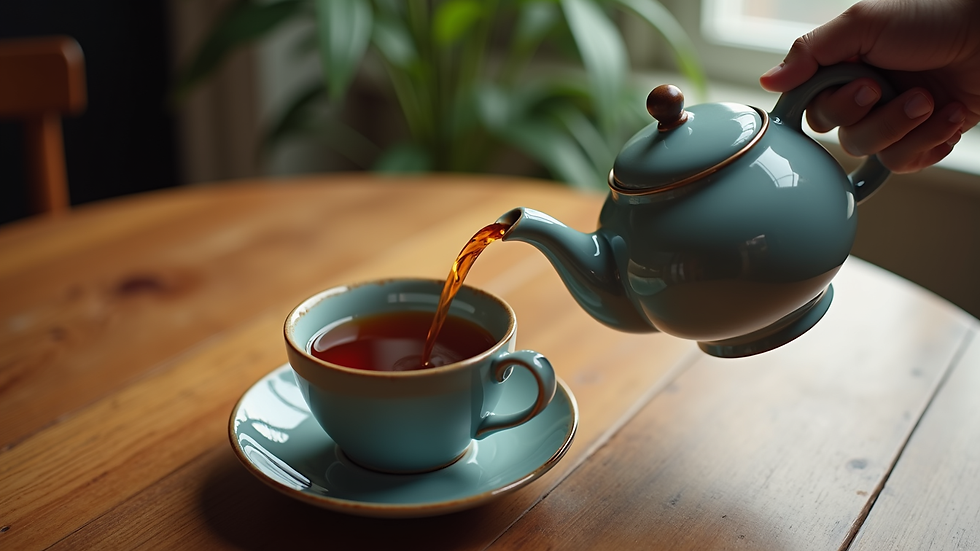
The Art of Enjoying Black Tea
Black tea is not just a drink; it’s an experience. The way we enjoy it can vary greatly. Some prefer it plain, while others like to add milk, sugar, or lemon. Each addition changes the flavor profile and can enhance the drinking experience.
Pairing Black Tea with Food
Black tea pairs well with a variety of foods. Its robust flavor complements savory dishes, pastries, and even chocolate. Consider enjoying a cup with a slice of lemon cake or a hearty sandwich. The combination can elevate both the tea and the food.
Exploring Different Varieties
There are many types of black tea to explore. Each variety has its own unique flavor and aroma. For example, Assam tea is known for its malty richness, while Darjeeling offers a more delicate, floral note. Experimenting with different types can lead to delightful discoveries.
Final Thoughts on Black Tea
Black tea offers a rich history and a world of flavors. Whether you call it black tea or red tea depends on where you are and how you see it. Brewing it in a gaiwan or teapot brings out different qualities, from delicate aromas to bold strength.
Next time you enjoy a cup, think about the journey those leaves took and the traditions behind your brew. Experiment with brewing methods to find what suits your taste best. Black tea invites you to slow down, savor, and connect with centuries of tea culture.
Explore the world of black tea with curiosity and enjoy every sip.
And remember, tea friends...it's a big world, get out and see it (and bring some tea with you)!
---wix---


Comments