


Let's Talk Tea (Part Ten)
Updated: 5 days ago
The Origins and History of Hei Cha
Dark tea, also known as hei cha in Chinese, is a category of fermented teas that has been produced for hundreds of years. Unlike green or black teas, dark tea undergoes a unique post-fermentation process that gives it a deep, mellow character. The two famous types, Liu Bao and Fu Zhuan, come from different regions in China and have distinct stories.
Liu Bao tea originates from Guangxi province. It gained popularity during the Qing dynasty when it was transported along ancient trade routes to Southeast Asia. The tea’s fermentation process involves piling and moistening the leaves, which encourages microbial activity. This method produces a tea with a smooth, woody flavor and a hint of sweetness.
Fu Zhuan tea comes from Hunan province and is prized for its dense, compact cakes. It is often aged for several years, allowing the flavors to develop complexity. Fu Zhuan has a slightly smoky aroma and a rich, full-bodied taste that dark tea lovers cherish. Its unique feature is the growth of "Golden Flowers" (Jin Hua or Eurotium cristatum), a beneficial probiotic fungus that forms yellow specks inside the tea and adds a smooth, earthy, and sweet taste.
Both teas were traditionally used as daily drinks by workers and travelers because of their robust flavor and digestive benefits. Over time, dark tea has gained recognition among tea connoisseurs worldwide for its unique qualities and healthful properties.
Brewing Dark Tea in Gongfu Cha Style
Gongfu Cha is a Chinese tea ceremony that emphasizes precision and multiple infusions. This method suits dark tea well, as it allows the flavors to unfold gradually.
Equipment Needed
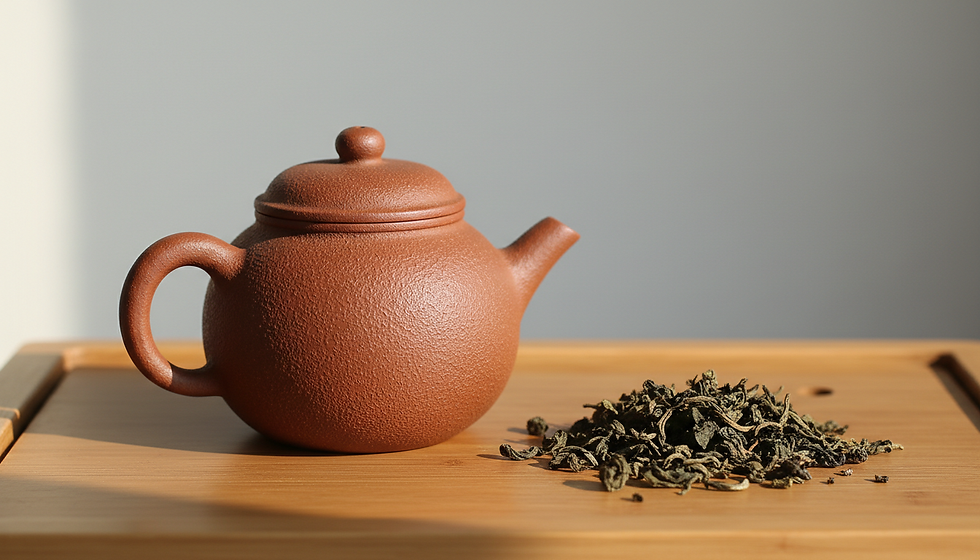
Small Yixing clay teapot or gaiwan
Tea pitcher (cha hai)
Small tasting cups
Tea tray to catch spills
Tea strainer (optional)
Step-by-Step Brewing
Warm the teaware: Pour hot water into the teapot and cups, then discard. This helps maintain temperature.
Measure the tea: Use about 1 gram of dark tea per 20 ml of water.
Rinse the leaves: Quickly pour hot water (around 95°C) over the leaves and discard the water. This cleans the leaves and awakens their aroma.
First infusion: Pour hot water over the leaves and steep for 10-15 seconds. Pour the tea into the pitcher, then serve into cups.
Subsequent infusions: Increase steeping time by 5 seconds with each brew. Dark tea can usually be infused 6-8 times, with flavors evolving each time.
This method highlights the tea’s layered taste, from earthy and woody to sweet and mellow. The small cups encourage mindful sipping and appreciation of aroma and texture.
Brewing Dark Tea in Traditional Western Style
For those who prefer a simpler approach, brewing dark tea in the Western style is straightforward and still rewarding.
Equipment Needed
Teapot or large mug
Tea strainer or infuser
Kettle
Brewing Instructions
Use about 2 grams of tea per 200 ml of water.
Heat water to around 95°C.
Place tea leaves in the teapot or infuser.
Pour hot water over the leaves and steep for 3-5 minutes.
Strain the tea and pour into a cup.
This method produces a stronger, more robust cup in one infusion. It’s ideal for busy mornings or when you want a quick, satisfying brew. You can adjust steeping time and leaf quantity to suit your taste.
Tips for Enjoying Dark Tea
Store properly: Dark tea improves with age but needs to be kept in a cool, dry place away from strong odors.
Experiment with water temperature: Slightly cooler water (around 90°C) can bring out sweeter notes.
Try different infusions: Each steeping reveals new flavors, so don’t rush through the tea.
Pair with food: Dark tea pairs well with rich, savory dishes and sweets like nuts or dried fruit.
Why Dark Tea Deserves a Place in Your Collection
Dark tea offers a unique experience compared to other teas. Its fermentation process creates flavors that evolve over time, making each cup a journey. Whether you enjoy the ritual of Gongfu Cha or the convenience of Western brewing, dark tea invites you to slow down and savor complexity.

Exploring dark tea like Liu Bao and Fu Zhuan opens a window into Chinese tea culture and history. It also offers a chance to discover new flavors and brewing styles that enrich your tea routine. Next time you want something different, reach for a dark tea and enjoy the depth it brings to your cup.
Remember, tea friends, get out and explore your world. And take some tea with you!
---wix---


Comments